Blog
The Antropy OpenCart Blog
What can a placement student actually contribute to a software company?
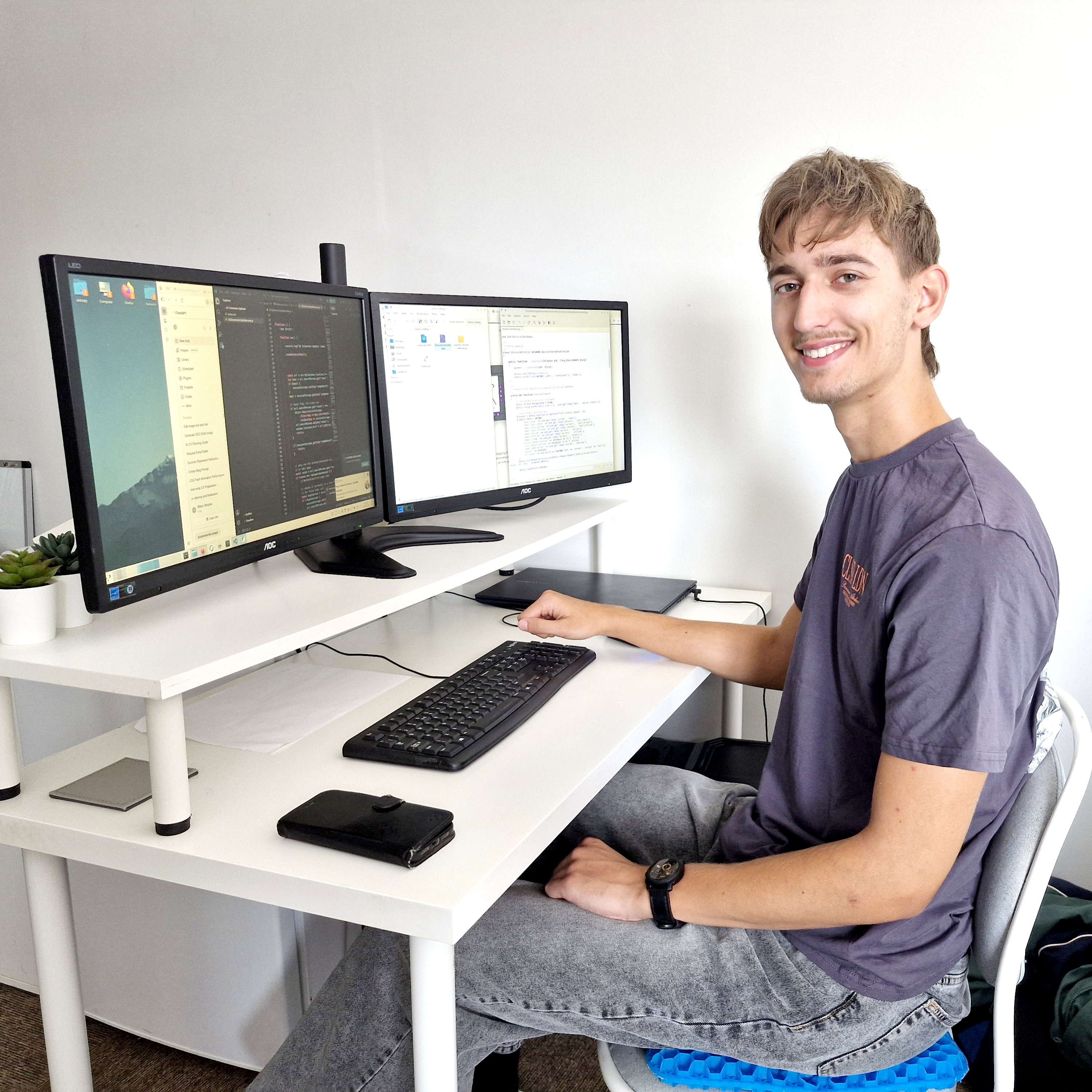
This summer, between my first and second year studying Computer Science at university, I joined Antropy for a summer placement. I originally came across the company a couple of years ago and was surprised to discover a company doing this kind of specialist e-commerce and software development work locally. After spending the last couple of months working with the team, I’ve come away with a much clearer understanding of what software development looks like outside of university.
Working on real projects
One of the main projects I worked on was File Change Monitor, a new OpenCart security extension that I developed from the ground up and brought to its first release. (We also wrote a blog post about this!)
Before I could get started, I had to set up my own OpenCart development environment and learn how the platform was structured, including its architecture and how extensions and modifications are created. From there, I worked across development, database work, the administration interface, testing and documentation.
It gave me the chance to work across a much wider part of a real project than I had experienced at university. One thing I really valued was knowing that there was a genuine use for what I was building, and that it wasn't just something designed to meet a specification and handed in like my assignments at university.
Alongside File Change Monitor, I also worked on internal tools and smaller client tasks. That included creating a PHP endpoint to provide server statistics as JSON, adding features to a server monitoring tool, and finding and fixing a bug in an existing OpenCart extension for a real client.
One thing always leads to another
One lesson that came up repeatedly was that development work rarely follows a neat, step-by-step path.
A good example was a feature that colour-coded server monitoring tiles based on website latency. On paper, it sounded fairly straightforward. In practice, getting it working involved understanding an unfamiliar codebase, tracing where data was collected and displayed, and then discovering that the colour calculations themselves needed a completely different approach to produce sensible results.
The same pattern appeared again and again. Solving one problem would often uncover another that needed addressing first. Sometimes that meant learning a new tool, understanding an unfamiliar part of OpenCart, or revisiting earlier decisions.
That was probably one of the biggest differences between university projects and professional development. Progress often comes from patiently untangling a series of smaller problems rather than following a plan exactly as written.
Skills beyond coding
Of course, I learned a lot of technical skills during the placement, working with multiple different languages and tools. I became more comfortable reading unfamiliar code, testing changes properly, managing deployments safely and keeping development environments in sync.
Just as valuable though, were the lessons that weren’t purely technical.
Being part of the team gave me an insight into how a smaller agency operates day to day. I saw how projects are planned, how responsibilities are shared across different roles, and how important communication was to keep everything moving.
I also got much better at judging when to work something out myself and when to get a second opinion. As I became more confident, I could pick things up faster and ask more useful questions, which often saved time and helped me understand the problem from a different perspective.
Looking ahead
This experience has given me a much stronger foundation going into the second year of my degree. More importantly, it has given me confidence. I’ve had the chance to build useful software, contribute to real projects and see my work become part of systems that people actually use. I now have a much better idea of what I can contribute to a real development team, as well as where I still have plenty to learn.
I’m hoping to stay involved with Antropy while I continue my studies, working on smaller projects and continuing to learn from the team. I’ve really enjoyed the combination of interesting work and an incredibly friendly and welcoming team. From being invited to the team pub lunch early on, to a teammate bringing in homemade fudge (thank you so much Kelly, your fudge is insane!), there were lots of small things that made me feel like I was part of the team rather than just someone there for the summer. I really appreciated how much trust I was given throughout the placement, being involved in real projects and client work and always having people around who were happy to guide me.
So, what can a placement student actually contribute to an e-commerce agency? In my case, I was able to get involved in far more than I expected, from developing new extensions to working on client tasks and internal tools. I’m really grateful for the opportunity to have been part of the team, and I’m looking forward to staying involved while I’m back at university.